At Victory Spirits Barrel Lab, we believe bourbon buying should involve more than a text message, a barrel age, and a price.
So naturally, we created a fictional mad scientist to say it out loud.
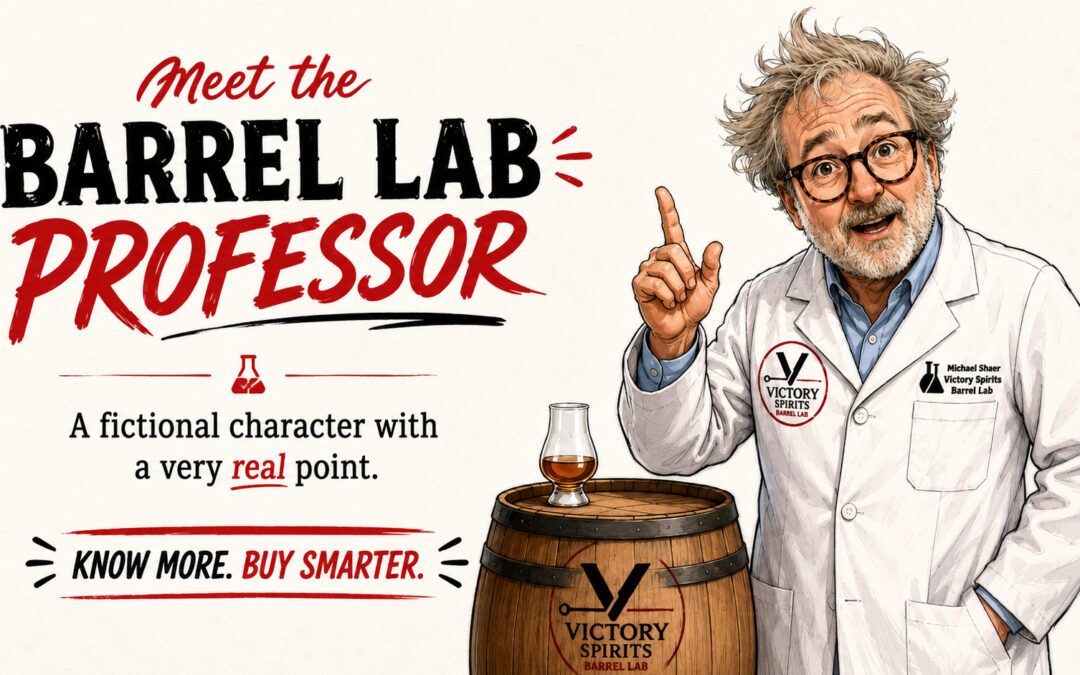
Meet the Barrel Lab™ Professor — the founder’s fictional hallucination, born somewhere between a barrel sample, a pricing spreadsheet, and a very committed bad hair day.
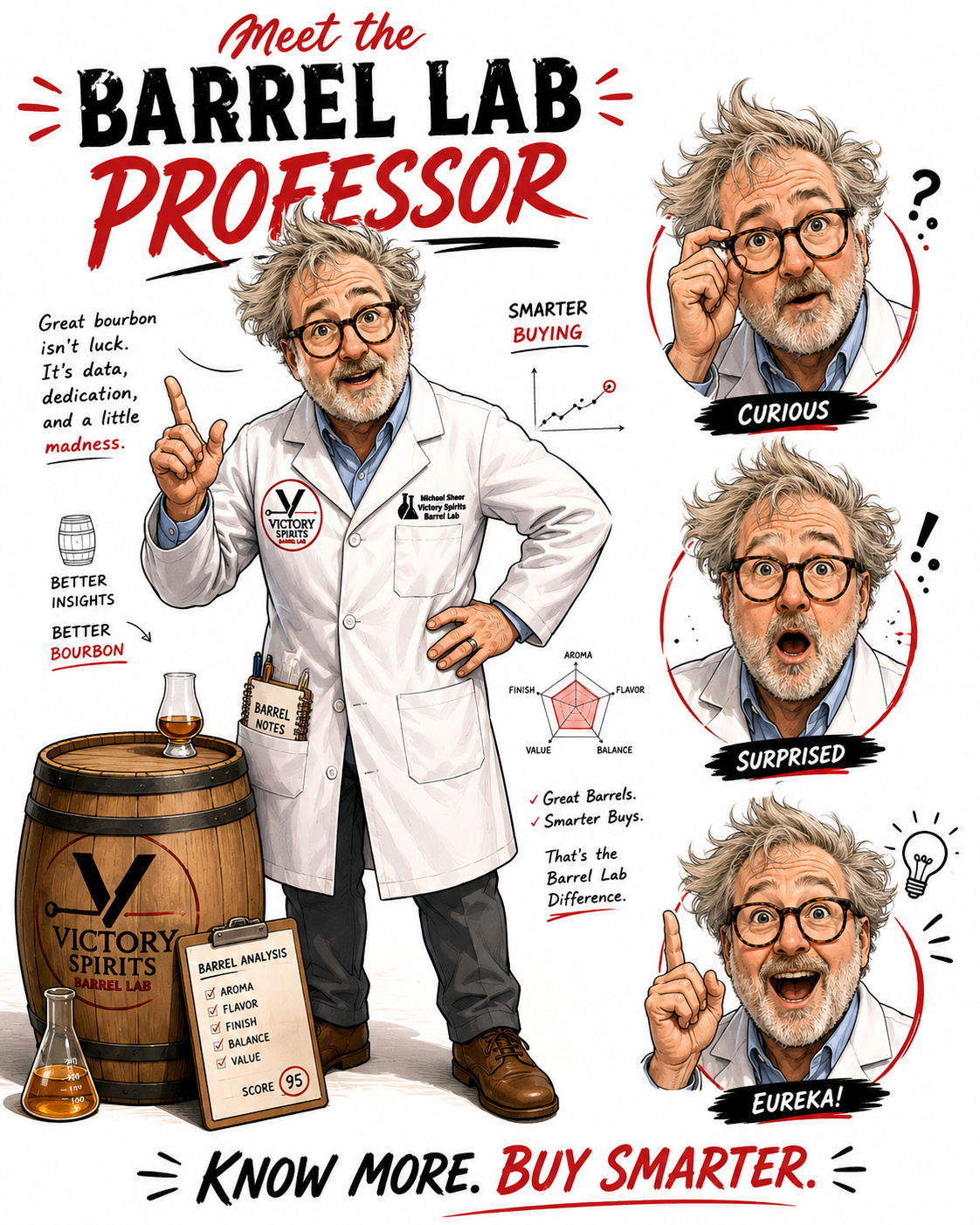
He is not a real science professor. He does not hold a chair at any accredited university. He should not be asked to grade your chemistry homework.
And any resemblance to the founder after too much barrel analysis is, at best, suspiciously coincidental.
But the Professor does stand for something serious:
Better information leads to better barrel decisions.
And in today’s bulk spirits market, that matters.
A Price Quote Is Not a Buying Strategy
For years, too much bulk spirits buying has started the same way:
“Got any barrels?”
“What age?”
“What price?”
“Send details.”
Price matters. Of course it does.
But price alone does not tell a brand owner whether a barrel is right for the brand, the budget, or the customer who will eventually decide whether to buy the bottle again.
A barrel that looks inexpensive can become expensive if it yields fewer bottles than expected, lacks flavor depth, requires more finishing support, or fails to fit the intended release strategy.
A barrel that appears more expensive may actually offer stronger value if it delivers better proof, better yield, better flavor, better finishing potential, and a stronger story at the bottle level.
That is why Barrel Lab focuses on more than the quote.
We look at the decision behind the quote.
The Four Questions Smart Buyers Should Ask
The Barrel Lab™ Professor has a simple view of smarter barrel buying:
Before you buy the barrel, ask better questions.
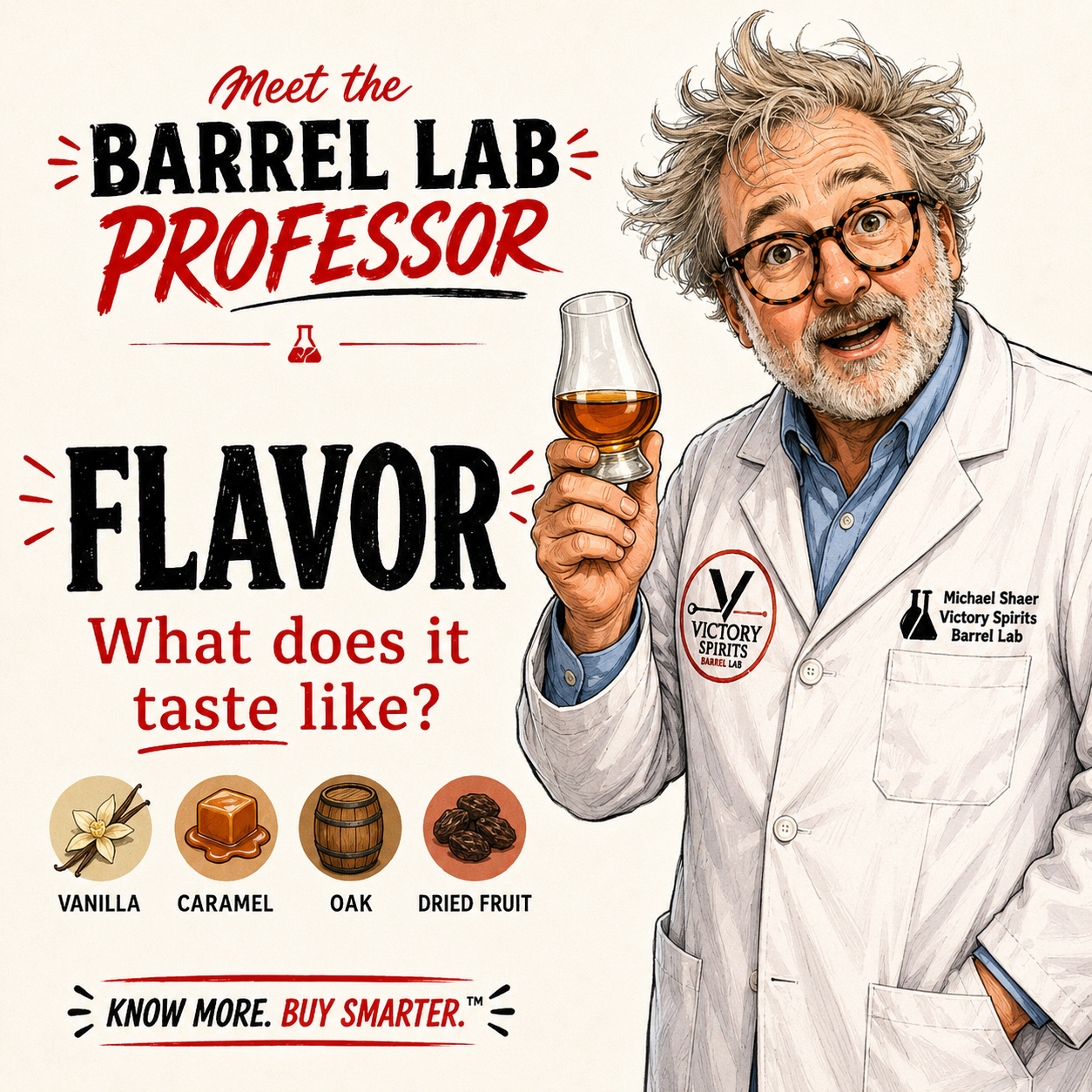
1. Flavor: What does it taste like?
Age is useful information. Source is useful information. Mash bill is useful information.
But none of those things replace sensory evaluation.
Flavor is where the future product begins. A barrel’s aroma, palate, structure, oak balance, sweetness, spice, fruit character, grain profile, and finish all help determine what the barrel can become.
Most buyers believe they know what they like, but are hard-pressed to define what they taste in a sample.
A brand owner needs to know whether the liquid supports the intended product.
- Is it bold enough for a single-barrel release?
- Is it balanced enough for a core expression?
- Is it better used as a blending component?
- Does it need finishing?
- Does it have a flavor profile that supports the brand story?
A barrel is not just inventory. It is the liquid foundation of a consumer experience.
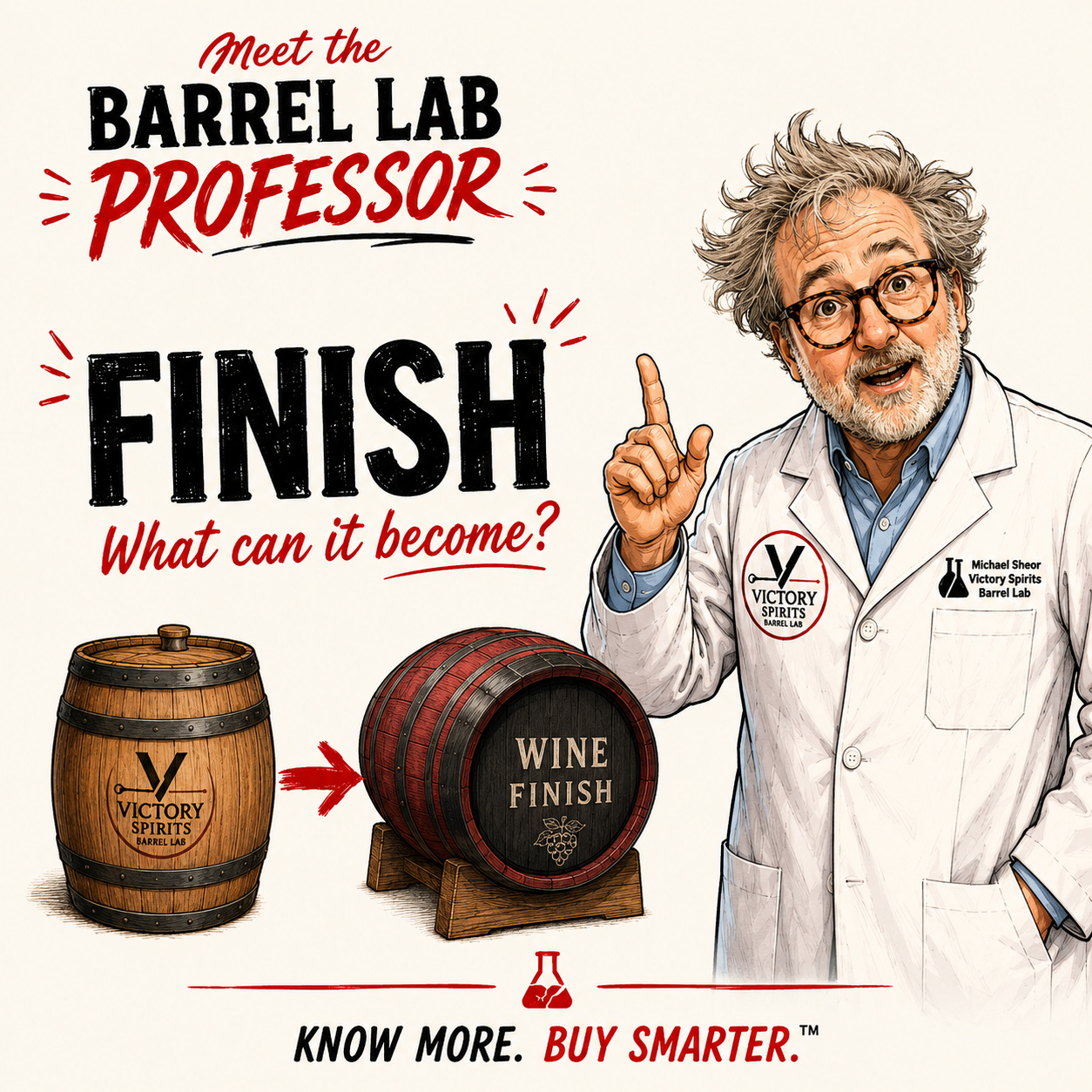
2. Finish: What can it become?
Some barrels are already exactly where they need to be. Others have the potential to become something more distinctive through finishing.
Finishing is not magic. It is a strategy.
The right finish can enhance fruit, sweetness, spice, texture, oak integration, or perceived complexity. The wrong finish can bury the base whiskey, confuse the profile, or create a product that feels forced.
That is why finishing potential matters before the purchase.
A buyer should understand whether a barrel is likely to benefit from secondary maturation, what style of finish might complement it, and whether the finished product would make sense for the intended brand, price point, and customer.
The question is not simply, “Can we finish it?”
The better question is:
Should we finish it, and if so, why?
3. Yield: How many bottles will it produce?
This is where the Professor starts waving his clipboard.
The barrel price is the headline. Yield is the economics.
Two barrels at the same price can have very different real costs once proof, gallons, bottling strength, dump loss, filtration loss, and final bottle count are considered.
A buyer who only looks at price per barrel may miss the more important number:
What is the real cost per finished bottle?
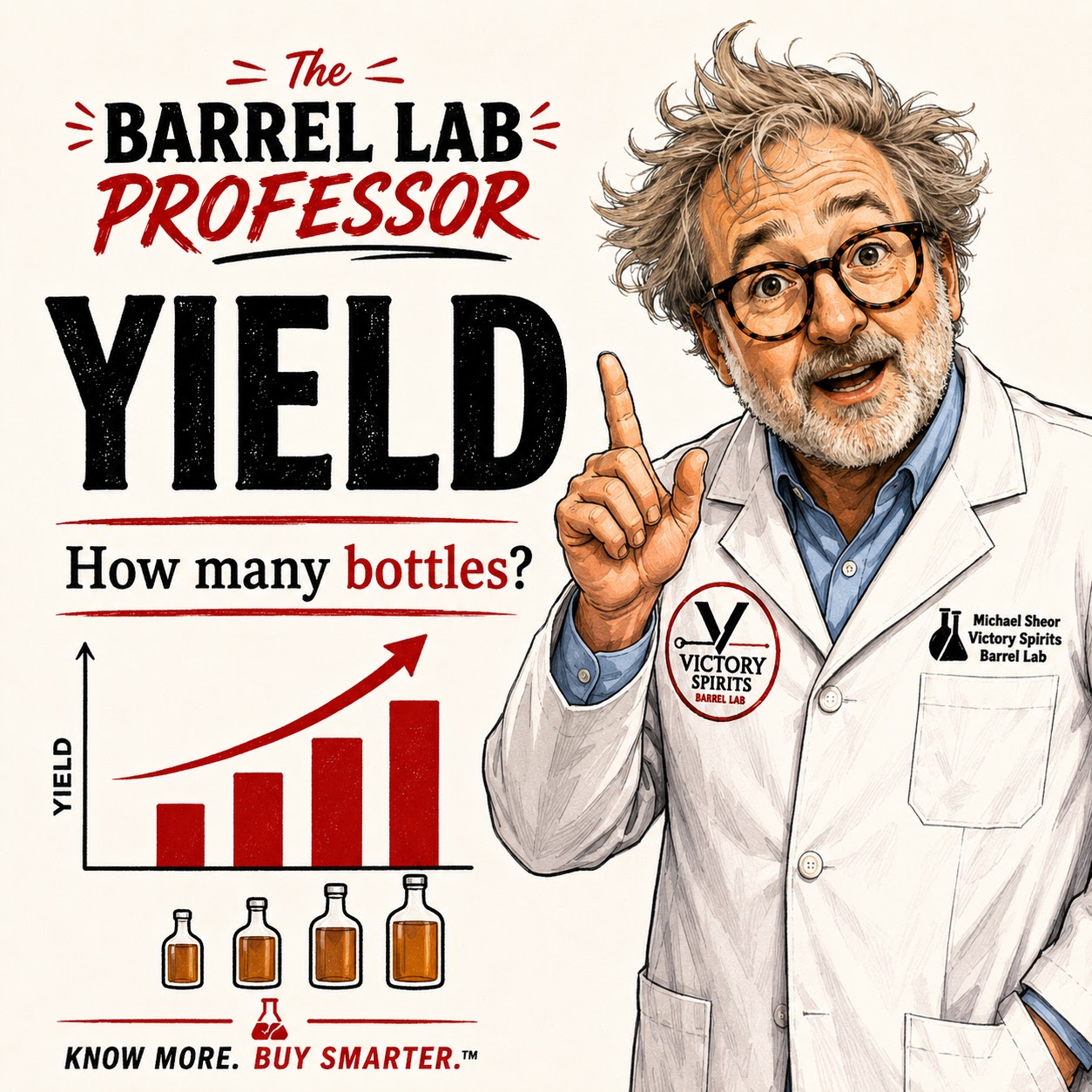
What is the real cost per finished bottle?
That number affects margin, retail pricing, distributor conversations, cash flow, release planning, and ultimately whether the product can succeed in market.
A low-priced barrel with poor yield may not be a bargain.
A higher-priced barrel with strong yield and better quality may create a better business outcome.
Smart buyers do not just ask, “What does the barrel cost?”
They ask, “What does the finished bottle cost?”
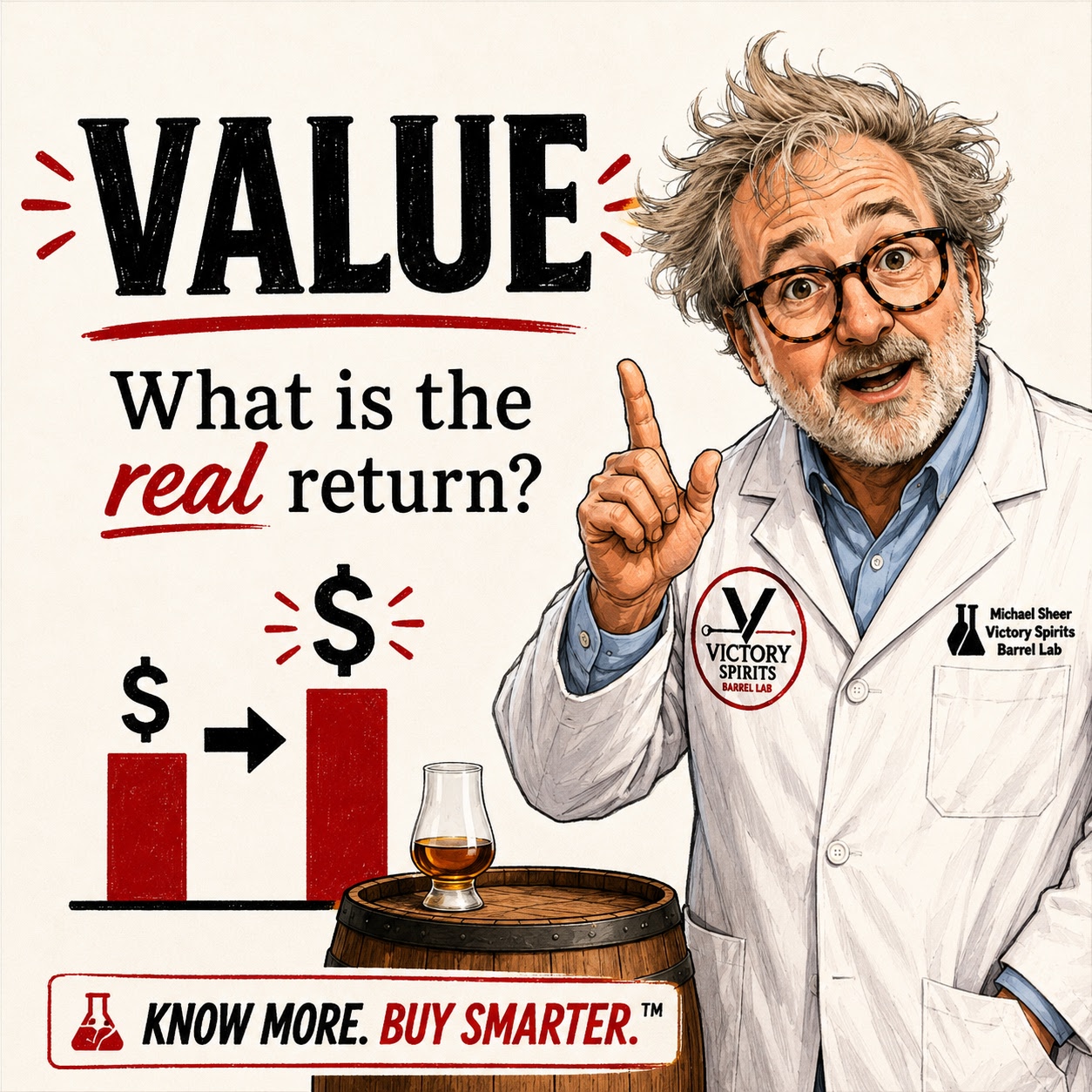
4. Value: What is the real return?
Value is not the same as price.
Value is what the barrel gives back.
At Barrel Lab, we help buyers think beyond the asking price by looking at comparable market context, estimated bottle yield, flavor potential, finish potential, and brand fit.
That is where VRV comparisons become useful.
A VRV comparison helps a buyer consider whether the opportunity makes sense relative to comparable barrels, replacement-value context, expected yield, and the likely finished-product opportunity.
The goal is not to make every barrel look good.
The goal is to help buyers understand what they are really buying.
Because the wrong barrel can consume time, cash, label space, sales energy, and consumer trust.
The right barrel can become a release customers remember.
Better Information Supports the Budget
Brand owners do not have unlimited budgets. Every barrel decision competes with packaging, bottling, compliance, freight, marketing, sales, distributor support, and working capital.
That makes barrel selection a capital allocation decision.
A buyer needs to know whether a barrel fits the budget not only at purchase, but all the way through bottling and sale.
The smarter budget question is not:
“Can I afford the barrel?”
It is:
“Can I afford this barrel after yield, finishing, bottling, packaging, taxes, logistics, margin requirements, and sales strategy are considered?”
Better information reduces surprises.
And in the spirits business, fewer surprises are good for everyone except the fictional Professor, who seems to enjoy shouting at spreadsheets.
Better Information Creates Better Opportunities
The best barrel decisions create options.
A well-selected barrel can support a single barrel release, a limited edition, a finished expression, a blend component, a private selection, a club offering, or a premium brand extension.
A poorly selected barrel narrows options.
It may need more correction, more explanation, more discounting, or more hope.
That is why the smartest buyers are not just shopping for barrels. They are building future opportunities.
They want liquid that gives them a stronger story, stronger economics, stronger consumer appeal, and stronger confidence in the finished bottle.
The Barrel Lab™ Difference
Barrel Lab™ was created to help buyers move from fragmented information to smarter decision-making.
We believe the best buyers deserve more than a quick quote.
They deserve useful context.
Flavor.
Finish.
Yield.
Value.
VRV comparisons.
Market context.
Brand fit.
Bottle-level thinking.
That does not make the buying process more complicated.
It makes the decision more complete.
And complete decisions tend to produce better outcomes.
The Professor’s Final Word
The Barrel Lab Professor may be fictional.
The need for better barrel intelligence is not.
In a market full of barrels, prices, claims, and opportunities, the advantage goes to buyers who do the work before the purchase — not after the mistake.
Because great bourbon is not luck.
It is evaluated.
It is selected.
It is understood.
It is matched to the right brand, the right budget, and the right customer.
Or, as the Professor prefers to say:
A price quote is not a buying strategy.
Know More. Buy Smarter.™
Disclaimer: The Barrel Lab Professor is a fictional advertising character and bears no resemblance to any actual science professor, living, tenured, retired, or tasting. Any similarity to the founder after excessive exposure to barrel samples, spreadsheets, and big bourbon ideas is purely intentional.
Take a dive inside a barrel with the Barrel Lab™ Professor