How 21% rye became the hidden platform behind modern bourbon
%
Rye Bourbon Mash
For most bourbon drinkers, the story starts with the label.
For producers, brokers, blenders, and brand builders, it often starts with three numbers:
75 corn / 21 rye / 4 malted barley.
70 corn / 21 rye / 9 malted barley.
Those numbers may look like production trivia. They are not.
They help explain how the modern bourbon boom scaled: the rise of sourced brands, contract distilling, private barrels, finished whiskey, and non-distilling producers. They also help explain where the next rebound may come from.
Because bourbon’s next phase will not be powered by hype alone. It will depend on good barrels, clear provenance, fair pricing, flexible supply, and whiskey that buyers and consumers understand.
That is where 21% rye bourbon matters.
Bourbon’s boom needed a platform
The last decade of bourbon growth was not just a consumer story. It was an infrastructure story.
New brands launched. Retail picks multiplied. Finished whiskey programs expanded. Barrel brokers became more important. Contract distilling grew. Non-distilling producers moved from the margins into the mainstream.
That did not happen by accident.
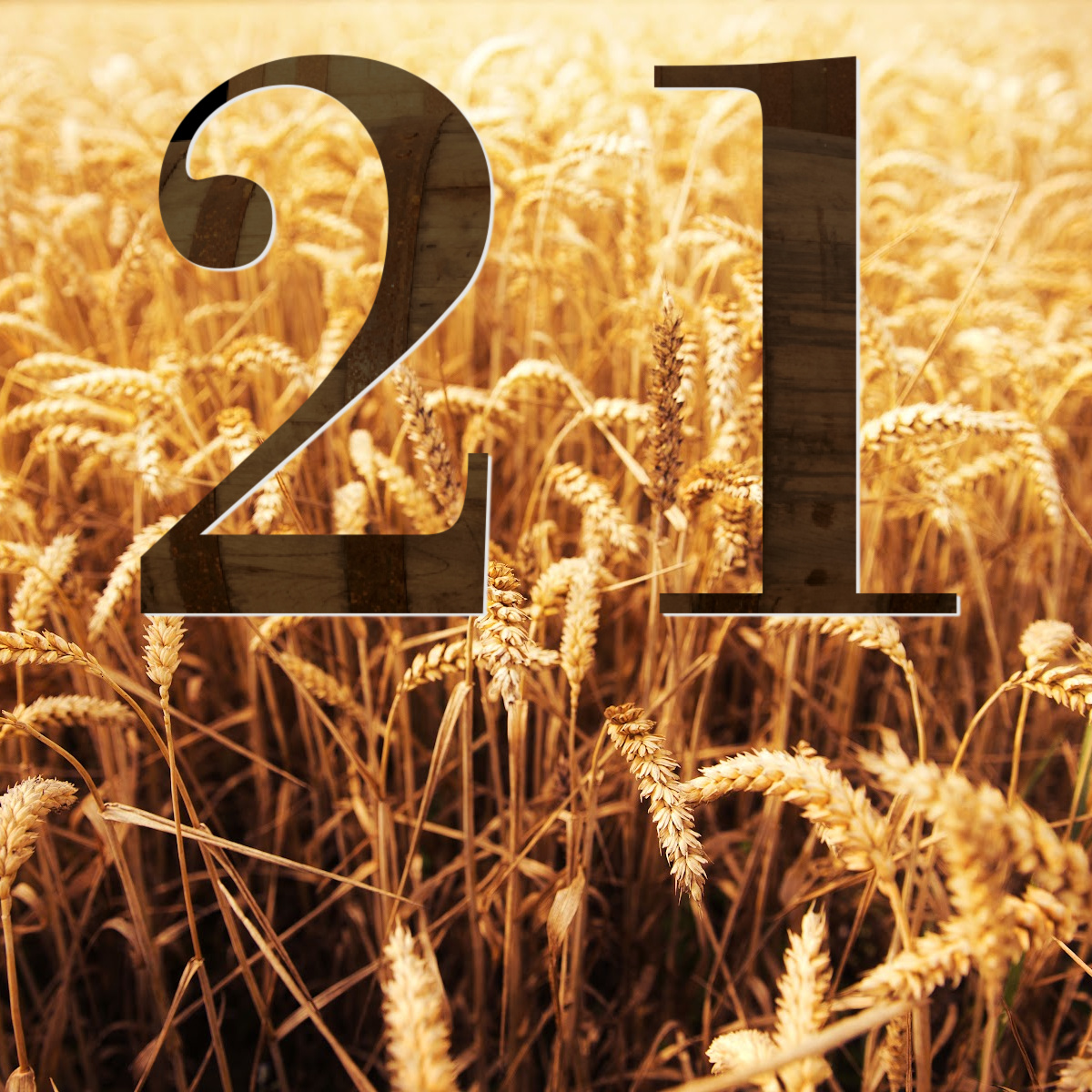
It happened because enough mature and maturing whiskey was available for entrepreneurs to build around. And again and again, one profile appeared across the sourced and contract market: 21% rye bourbon.
The two most visible versions are:
75% corn / 21% rye / 4% malted barley
and
70% corn / 21% rye / 9% malted barley
Different producers. Different states. Different house styles. Same key number.
Twenty-one percent rye sits in bourbon’s commercial sweet spot. It brings spice, structure, and lift without becoming overly aggressive. It keeps enough corn sweetness to feel classic. It works neat, in cocktails, as a single barrel, in a blend, or under a finishing program.
It is flavorful enough for enthusiasts and approachable enough for the broader market.
That is why 21% rye became bourbon’s middle lane.
More than a recipe
A mash bill is not only a flavor decision. It is a production decision, a finance decision, an inventory decision, and eventually a brand decision.
For distilleries, a standard 21% rye bourbon is efficient and commercially liquid. It can be produced at scale, aged with confidence, and sold into multiple channels: bulk whiskey, contract programs, single barrels, small batches, finished releases, and private labels.
For brand owners, it solves a different problem. It gives them a foundation.
A young brand may not have six years to wait. A retailer may want a proprietary barrel. A blender may need a reliable base. A portfolio owner may want a limited release. A finishing program may need bourbon with enough structure to handle secondary wood.
A good 21% rye bourbon can do all of that.
That is why these mash bills became more than recipes.
They became platforms.
The mash bill is the chassis.
The barrel is the engine.
The blender is the driver.
The brand is the bodywork.
Mash bill is not destiny
Two bourbons can share a mash bill and still drink very differently.
Age matters. Warehouse location matters. Barrel entry proof matters. Yeast, fermentation, distillation cuts, cooperage, char level, climate, dumping proof, filtration, batching, proofing, and finishing all matter.
A 70/21/9 Kentucky bourbon from one warehouse may not taste like another 70/21/9 bourbon from a different warehouse. A 75/21/4 barrel-proof single barrel may drink nothing like a lower-proof small batch built from the same recipe family.
That is why “sourced” should not be treated as a dirty word.
The better questions are:
What did you select?
Why did you select it?
How old is it?
Where was it aged?
How was it blended or finished?
Is the story honest?
The mash bill tells us where the whiskey started. It does not tell us where the brand took it.
Why the rebound may depend on it
The bourbon market has changed.
The easy-money phase is over. Not every label, celebrity bottle, sourced release, or barrel program will be rewarded simply because bourbon is hot. Consumers have more choices. Retailers have more leverage. Brand owners are more disciplined. Capital is more cautious.
That is not the end of bourbon.
It is the beginning of a more selective market.
The rebound will come from matching the right whiskey to the right opportunity. That is where 21% rye Kentucky bourbon has real value.
It can become a straight bourbon release.
A single-barrel program.
A finished whiskey line.
A blending component.
A private label.
A foundation for a new brand.
It offers what the market needs during a reset: liquidity with utility.
Not every barrel has that. Some whiskey is too young, too narrow, too hot, too expensive, or too limited in use.
But well-made 21% rye Kentucky bourbon has range. It is familiar without being generic, structured without being harsh, commercial without being boring, and flexible without being anonymous.
That range helps barrels move.
It helps brands launch.
It helps retailers differentiate.
It helps smaller players compete.
The future rebound does not depend on 21% rye because it is the only good bourbon mash bill.
It depends on what 21% rye represents: a scalable, understandable, adaptable bourbon platform that can help turn inventory into products people actually want to buy.

Not all bourbon is 21% rye
To be clear, 21% rye does not define all bourbon.
Many major bourbon families sit outside this lane. Some are lower rye. Some are higher rye. Some are wheated. Some use multiple mash bills.
That is the point.
The argument is not that all bourbon tastes the same. It does not.
The argument is that in the sourced, contract, private-barrel, and emerging-brand side of the business, 21% rye became one of the most important shared languages in the market.
It gave producers something they could make at scale.
It gave brand owners something they could build around.
It gave consumers something familiar enough to trust and flavorful enough to enjoy.
That is why it helped power the boom.
And that is why it may help power the rebound.
The opportunity now
The next bourbon cycle will favor better selection, better transparency, better pricing, and better execution.
That is especially true for buyers looking at Kentucky bourbon.
A mature or maturing 21% rye Kentucky bourbon is not just inventory. It is optionality. It can support a new brand, a private barrel program, a finished whiskey project, a limited release, or a broader portfolio strategy.
That is why we are paying close attention to these barrels.
And it is why we are preparing to list more 21% rye Kentucky bourbon soon.
Not because the mash bill alone makes whiskey special.
Because in the right barrel, at the right age, at the right price, and in the hands of the right buyer, 21% rye Kentucky bourbon may be exactly the kind of platform this market needs next.
The mash bill tells us where the whiskey began.
The rebound will depend on what people are smart enough to do with it next.